KnightGuard : GambitCyber’s AI-Enabled Proactive Threat Exposure Management Platform

1st September 2024
Welcome to the Inaugural blog post from Gambit Cyber Team. Let me take you through how Gambit Cyber came into being, what KnightGuard Platform is and why we decided to build it.
About Gambit Cyber
In today’s Cyber Security landscape, especially on the Proactive side of Security, a lot of organisations are doing a fabulous job at curating Cyber Threat Intelligence for their customers. In addition there are a lot of organisations as well as individuals that regularly publish advisories, threat reports, blogs, news articles, github content, open source projects that act as a relevant source of Threat Intel for a lot of use cases.
While having a common source of Threat Intel (aka TIP Platforms) is useful, unfortunately, the onus of Operationalising that Threat Intel is mostly left to the organisation that buys into these Platforms. This results in a complex, error prone and sometimes non-measurable process of defending against the threats. MITRE ATT&CK Framework gave the industry a common language to measure the defences of an organisation but that should not be considered as the golden rule of security posture measurement.
Gambit Cyber came into being as a result of seeing the SecOps and ITOps team struggle with Operationalizing Threat Intel at scale.
Few areas which are most difficult to tackle in the Operationalisation of Threat Intel are summarised below:
- Understanding what aspect of Threat should the team focus on today(or this week), given that they know what threats are relevant to them.
- How does the existing Security Products defend the organisation in mitigating the relevant Threats.
- Are they working as intended?
- Do they really bring value to the organisation?
- How can the Blue Team prioritise the Detections by understanding the choke points on an attack.
- How can the Red Team conduct Prioritised Simulations of various attack vectors?
- How can the Team proactively Detect and Hunt for Threats without spending days and weeks writing Threat Detection/Hunting Hypothesis and the corresponding queries.
- Understanding what are the Top 20% of the Threat Vectors which when handled will result in maximum Risk reduction for an organisation.
- How to continuously do all the above in an efficient and repeatable way.
Conclusion
We have built KnightGuard with continuous support from our customers, advisors and the larger Security Community. We strive to be the best and will continue to work towards achieving the same.
Please visit our website to learn more about what Use Cases KnightGuard solves and how it solves them. And if you have any query, please do not hesitate to contact us.
Disclaimer: The information provided on this blog is intended for general information purpose only and does not constitute legal, financial, medial, or other advice. By using the blog, you hold the author and Gambit Cyber B.V. harmless from all claims, damages, or expenses arising from the use.
Related Reading
Explore more insights on continuous exposure management and AI defense.
Chakravyuh: What an Ancient Battle Formation Can Teach Us About Modern Cyber Defence
Discover how CTEM uses the ancient Chakravyuh strategy to strengthen modern cyber defence, proactively manage threats, and protect critical business assets.
Atanu Paul

Multiple Incidents, One Lesson: Exposure Is a Pipeline, Not a Scan
Discover how CTEM and AI help organisations continuously identify, prioritise, and reduce cyber risk.
Ishtiyaq Shah
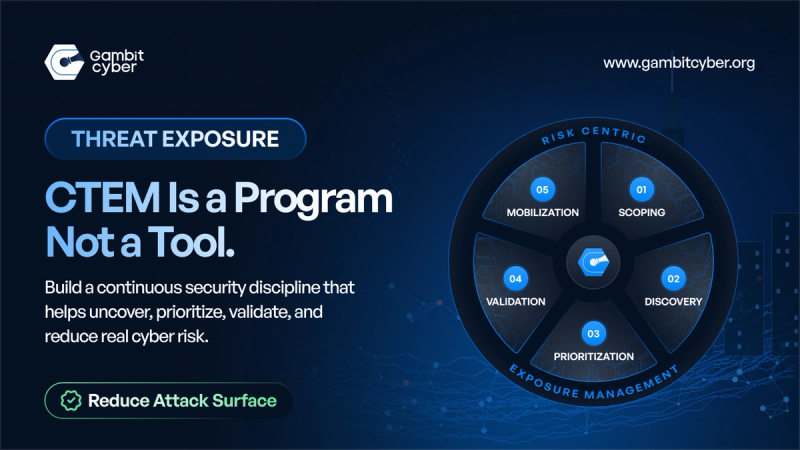
CTEM Is a Program. Not a Tool.
Last week in Singapore during the Cyber Executive Circle, I posed standing next to a banner with Manuj, pointing at a single line that I
Shrikant Shitole
Ready to level up your cyber defence?
Supports modern enterprises with agentic AI discovery, real-time threat validation, and autonomous exposure prioritization.